

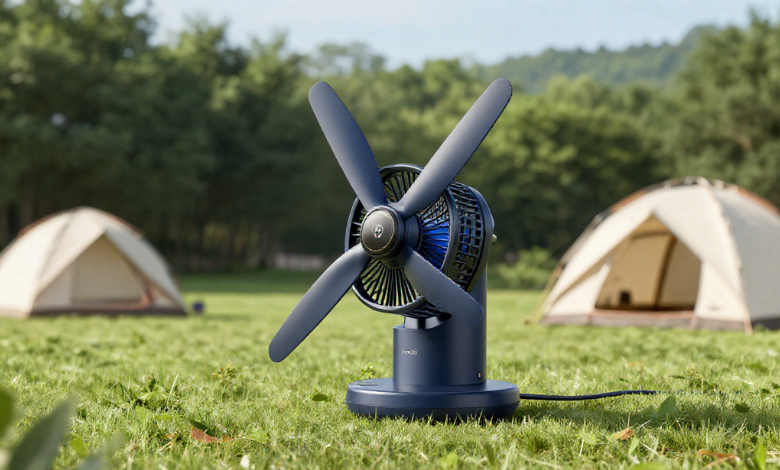
Discover the truth about a portable wind generator for camping, real performance, pros, cons, and expert tips for campers.
I still remember the first time I seriously considered a portable wind generator for camping.
It wasn’t because I was trying to be fancy or ultra-techy. It was because my phone was at 7%, my power station was nearly dead, the sun had disappeared behind thick clouds hours ago, and I was sitting at a quiet campsite thinking, “There has to be a better way.” Solar technology had failed me that weekend. Again.
So when I later saw videos, blog posts, and product listings promising “free power anywhere the wind blows,” I was intrigued. Honestly, who wouldn’t be? A lightweight portable wind generator for camping that fits in your trunk, works day and night, and keeps your devices alive while you’re off the grid sounds like a camper’s dream, an impressive piece of outdoor technology.
But as I would soon acquire, and as many campers quietly discover, portable wind generators for camping are not scams, but they are deeply misunderstood.
This article isn’t a sales pitch. It’s a field report. A reality check. And, in many ways, a personal journey through expectations, experiments, small disappointments, and a few surprising wins, all powered by modern camping technology.
If you’re thinking about buying a portable wind generator for camping, or you’re just curious whether they actually work, you’re in the right place.
Why Campers Are Suddenly Searching for Portable Wind Generators
Camping has changed.
It’ s no longer just tents, marshmallows, and flashlights. Modern camping involves:
- Phones for navigation and emergencies
- Cameras and drones
- Portable fridges
- LED lights
- Power stations and battery packs
And with that comes energy anxiety.
Fuel generators are loud, smelly, and banned in many campgrounds. Solar panels are great… until they aren’ t. Shade, clouds, short winter days, or forest camping can turn a solar setup into an expensive piece of dead plastic.
That’ s where the idea of wind power sneaks in.
The logic feels elementary:“ If the sun isn’ t reliable, maybe the wind is.” And in theory, that makes sense.
In practice? It’ s more complicated.
What Brands Promise vs. What Actually Happens in the Wild
This is where my own journey took its first sharp turn.
Most portable wind generators for camping advertise 300W, 400W, sometimes even higher. Those numbers look impressive, especially when compared to small solar panels.
But here’ s the part that’ s rarely explained clearly: Those wattage numbers are rated power, not real- world power.
Rated power is measured under perfect lab conditions:
- Substantial, steady wind
- Ideal height
- No turbulence
Camping conditions are none of those things.
In real campsites, most portable wind generators for camping produce 10– 40 watts on average. Sometimes less. Occasionally more. But rarely anywhere near what the box suggests.
The first time I hooked one up, I kept checking the display, thinking something was wrong.
Nothing was inaccurate.
That was just reality.
The Big Truth Most People Don’ t Realize: Wind at Campsites Is Weird
Here’ s something I wish I had known earlier: Wind near the ground behaves very differently than wind up advanced.
Large wind turbines work because they sit dozens, sometimes hundreds, of feet above the ground. Portable wind generators for camping operate just a few feet up, often surrounded by:
- Trees
- Tents
- RVs
- Rocks
- Uneven terrain
This creates turbulence, not smooth airflow.
And wind turbines hate turbulence.
You might perceive wind on your face, recognize it rustling leaves, even discern your tent flapping, yet the turbine struggles to spin consistently.
It’ s appreciate trying to ride a bike on a road that keeps randomly disappearing.
“ But It Works at Night!”, The Night- Time Myth
One of the most repeated claims about portable wind generators for camping is that they’ re superior to solar because they work at night.
Technically? True.
Practically? Not always helpful.
Night- time wind tends to be:
- Inconsistent
- Directionally unstable
- Bursty rather than steady
That leads to irregular charging, not the smooth, predictable flow people imagine.
I’ ve had nights where the turbine spun beautifully for 10 minutes… then stopped completely for the next hour.
It’ s power, yes. But not dependable power.
The Noise Problem Nobody Warns You About
Let’ s talk about something reviews often gloss over: noise.
Portable wind generators are not screaming loud. But in a quiet forest, desert, or mountain campsite, even a soft“ whoosh… click… whirr” becomes noticeable.
And once you notice it, you can’ t un- notice it.
There’ s also vibration. Mount a turbine to an RV or a pole that’ s not well- anchored, and that vibration travels.
It’ s not unbearable. But it’ s enough to:
- Disrupt sleep
- Create subtle irritation
- Make you turn it off at night
Ironically, the time you most want night- time charging is when you’ re least likely to tolerate the sound.
Setup Fatigue Is Real
Another thing I underestimated was setup effort.
Solar panels? Unfold. Point toward sun. Done.
Portable wind generators?
- Assemble blades
- Secure mast
- Anchor guy lines
- Adjust angle
- Check clearance
Do that once, it’ s fun. Do it every day while moving campsites, and it becomes a chore.
By the third relocation, I found myself asking:“ Is this small amount of power really worth the effort?” Sometimes the answer was yes. Often, it wasn’ t.
The Hidden Rule Problem: Campground Restrictions
This one catches people off guard.
Many campgrounds, especially national parks, restrict:
- Temporary structures
- Tall poles
- Spinning devices
Portable wind generators fall into a gray area. Some rangers allow them. Some campsites prohibit anything that could:
- Create noise
- Distract wildlife
- Pose safety risks
You often won’ t know until you arrive.
That uncertainty alone makes wind generators impractical for many casual campers.
So… When Does a Portable Wind Generator Actually Make Sense?
Despite everything I’ ve said so far, this isn’ t a“ don’ t buy one” article.
It’ s a“ know when it works” article.
Portable wind generators make sense when:
- You camp in open coastal areas
- You utilize time in deserts or plains
- You stay off- grid for long periods
- You already employ a hybrid solar+ wind setup
In those situations, wind can quietly fill the gaps solar leaves behind.
Think of it less as a primary power source and more as a supporting character, not the hero.
Wind vs Solar: Real Camping Scenarios( Not Spec Sheets)
| Scenario | Wind | Solar |
|---|---|---|
| Forest camping | Poor | Good |
| Beach camping | Excellent | Works, but sand and heat can be issues |
| Night charging | Unreliable | Poor |
| Weekend trip | Overkill | Simple and reliable |
| Long off-grid stay | Useful as backup | Primary source |
The Hybrid Truth Most Marketers Don’ t Push
Here’ s the most honest conclusion I’ ve reached: Smart campers don’ t choose between wind and solar. They combine them.
Solar provides predictable daytime charging. Wind fills in unpredictable gaps, cloudy days, shaded areas, occasional night bursts.
Together, they create resilience. Alone, each has frustrating weaknesses.
What to Actually Look for If You’ re Buying One
If you do decide to buy a portable wind generator for camping, ignore flashy watt numbers.
Focus on:
- Low startup wind speed
- Establish quality
- Noise ratings
- Ease of setup
- Compatibility with your power station
And most importantly, read negative reviews. That’ s where the truth lives.
Quick FAQ for Campers
Q: Is it noisy at night?
A: Slightly, especially in quiet campsites. Vibrations can travel through poles or RV mounts.
Q: Can it charge a power station?
A: Yes, but slowly and inconsistently unless the wind is effective and steady.
Q: Is it allowed in national parks?
A: Check rules. Many parks have restrictions on temporary spinning devices.
Q: How much wind is“ enough”?
A: Most portable units necessitate at least 8– 12 mph to generate meaningful power.
My Honest Final Verdict
Portable wind generators for camping aren’ t magic. They aren’ t useless either.
They’ re misunderstood tools sold with exaggerated expectations.
If you go in expecting:
- Free, unlimited power everywhere→ you’ ll be disappointed
If you go in understanding:
- Inconsistent wind
- Modest output
- Specific implement cases
You might actually appreciate what they offer.
I still bring mine on certain trips. Not all. And that, more than anything, tells you the truth.
Key Takeaways:
- Not a magic solution – Portable wind generators can help supplement power, but they rarely match advertised output in real-world camping conditions.
- Best used as backup, not primary power – They work best in combination with solar panels, forming a hybrid system that covers gaps when solar isn’t sufficient.
- Wind conditions matter – Forests, shaded areas, and turbulence reduce efficiency. Open coastal areas, deserts, and plains are ideal for consistent performance.
- Noise and vibration can be disruptive – Even small units can create noticeable sound and vibration, especially at night, which may affect sleep or comfort.
Additional Resources:
- 10 Best Portable Wind Generators for Eco-Friendly Power on the Go: A comprehensive buying guide that explains key factors to consider when choosing portable wind turbines, including power output, portability, startup wind speed, and durability , perfect for campers weighing their options.
- Best Wind Generator for Camping (Updated 2025): Authoritative review of top wind generator kits for camping and outdoor energy needs, comparing reliable models with details like controllers and blade design.
- Best Portable Wind Turbine for Camping: A detailed list of leading wind turbine recommendations suitable for camping, including power ratings, pros/cons, and real use cases